
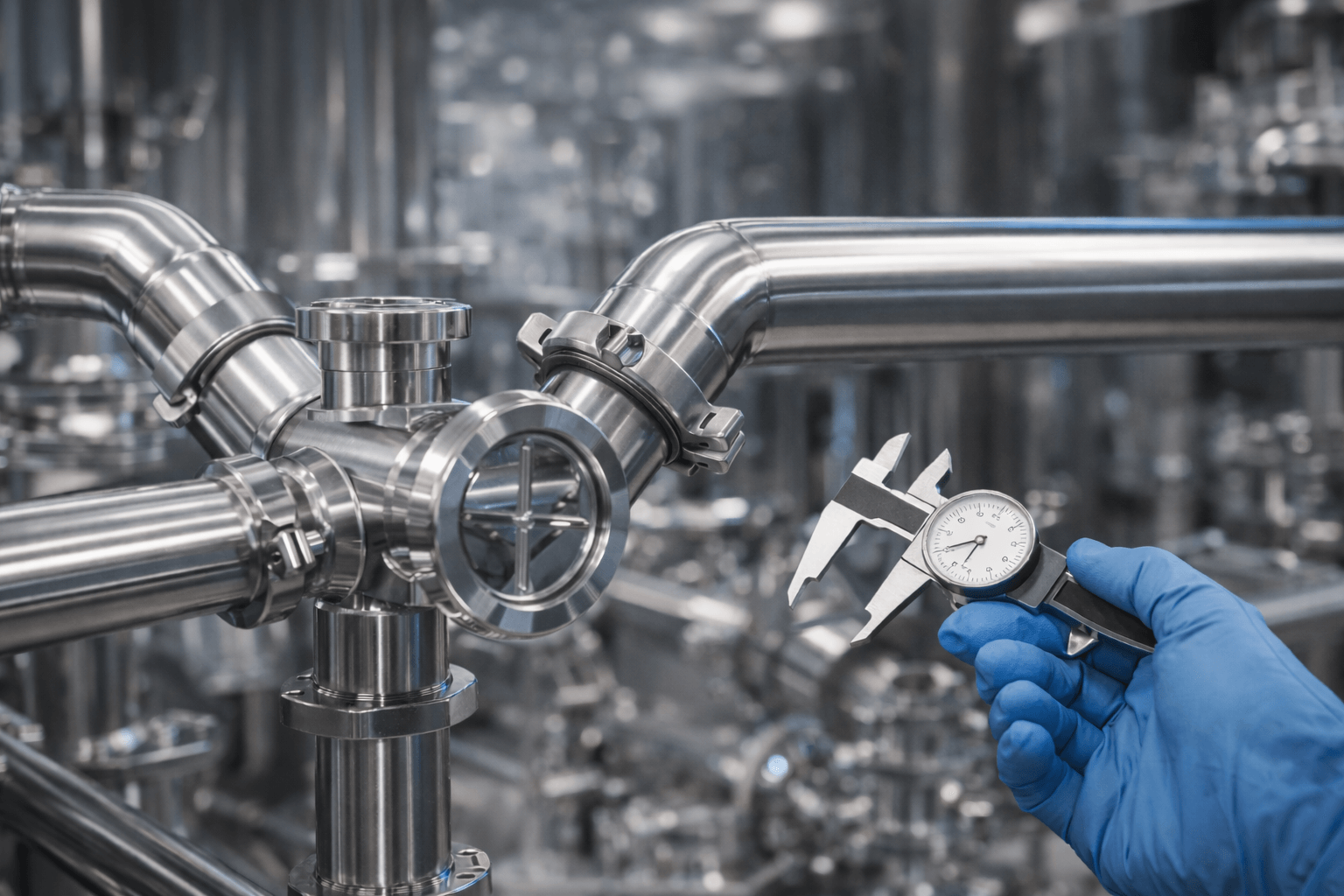
Sanitary Stainless Fabrication & Orbital Welding in SFN Systems
Introduction
In liquid-cooled GPU environments, coolant purity and weld integrity directly impact long-term performance. Unlike conventional piping systems, SFN infrastructure must maintain controlled internal surface quality.
Off-site sanitary fabrication is critical.
1. Why SS304L / SS316L Matters
Stainless grades 304L and 316L are selected for:
-
Corrosion resistance
-
Coolant compatibility
-
Structural durability
Controlled wetted material selection prevents long-term degradation and contamination.
2. Orbital & TIG Welding Precision
Orbital welding ensures:
-
Repeatable weld quality
-
Consistent penetration
-
Reduced internal irregularities
TIG welding supports structural assemblies and larger headers.
Controlled purge processes protect internal surfaces during welding.
3. Weld Traceability & Documentation
Every weld should be:
-
Logged
-
Traceable
-
Inspected
Documentation supports quality audits and ensures accountability throughout fabrication.
4. Why No On-Site Welding Improves Reliability
On-site welding introduces:
-
Environmental contamination
-
Inconsistent weld control
-
Delays during installation
Prefabricated stainless assemblies eliminate these risks and accelerate deployment.
Conclusion
Sanitary stainless fabrication and orbital welding provide the structural and cleanliness foundation required for reliable Secondary Fluid Networks.
Build with Controlled Stainless Fabrication
Ensure clean, traceable, and no on-site welding SFN assemblies with SFN Solutions. Our controlled fabrication workflow reduces contamination risk and accelerates deployment timelines.