
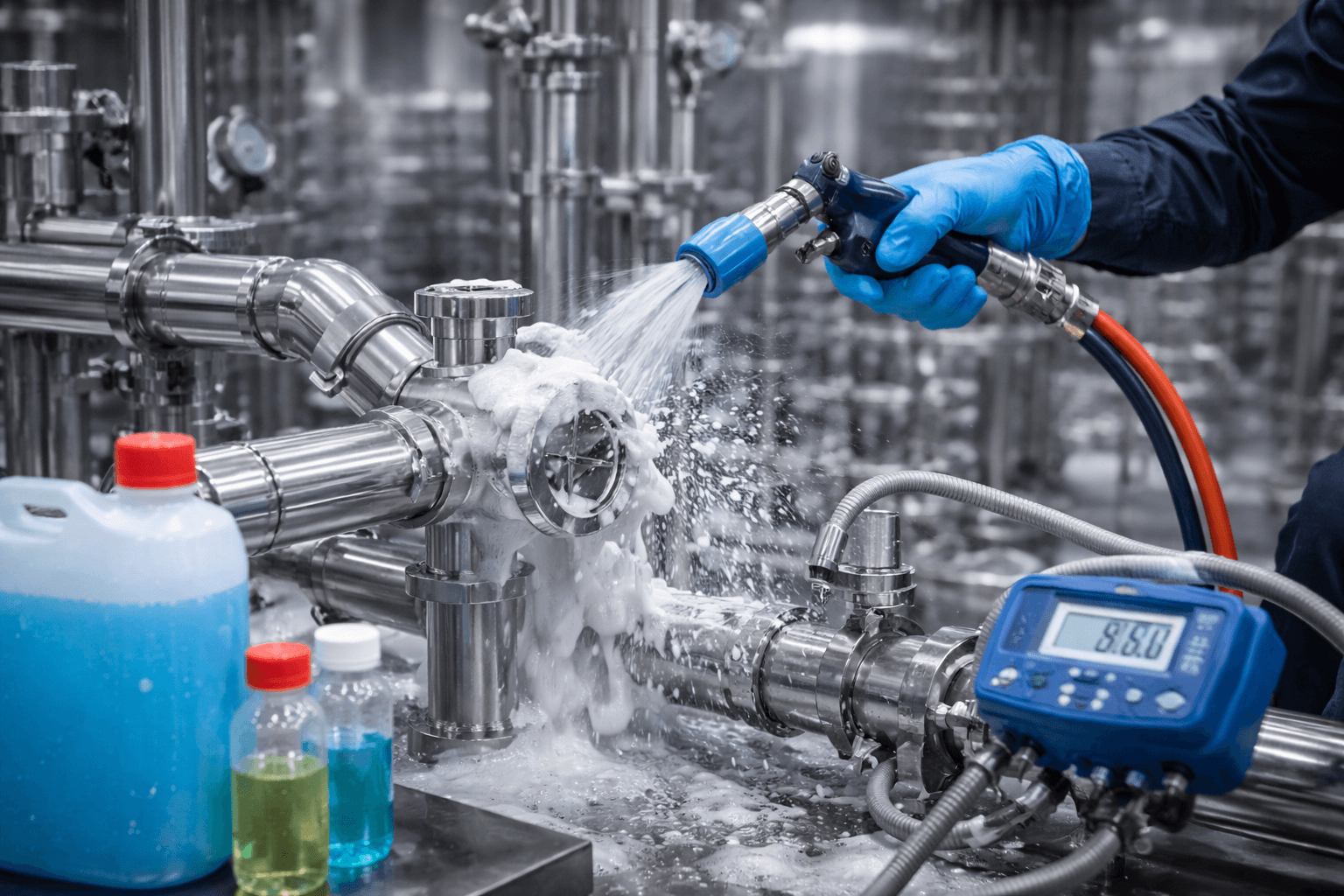
Cleaning, Passivation & Turbidity-Controlled Flushing in SFN Deployments
Introduction
Coolant cleanliness is mission-critical in direct-to-chip liquid cooling systems. Contamination inside the Secondary Fluid Network can damage CDUs, restrict flow, and impact thermal performance.
Controlled cleaning and flushing processes ensure system readiness.
1. Citric Passivation & Surface Protection
Passivation removes free iron and enhances corrosion resistance.
Citric-based treatments aligned with ASTM references help maintain internal surface stability.
This step is essential after stainless fabrication.
2. Controlled Flushing to Turbidity Targets
Flushing is not just about water flow — it must be measured and verified.
Best practice includes:
-
Defined flushing flow rates
-
Turbidity monitoring
-
pH checks where required
-
Documentation of cleanliness levels
Meeting turbidity targets ensures internal surfaces are free of debris and residues.
3. Drying & Sealed Delivery
After flushing:
-
Systems are dried using clean air or nitrogen
-
Ends are capped and sealed
-
Assemblies are protected for transport
This prevents recontamination before installation.
4. Why Cleanliness Directly Impacts Reliability
Contaminated systems can cause:
-
Flow restriction
-
Heat exchanger fouling
-
Pump wear
-
Premature component failure
Controlled cleaning significantly reduces operational risk.
Conclusion
In GPU liquid-cooled environments, cleaning and flushing are not optional steps — they are critical quality controls that ensure long-term system performance.
Ensure Coolant Cleanliness from Day One
From citric passivation to turbidity-controlled flushing, SFN Solutions delivers validated, sealed SFN systems ready for commissioning.